LAST LETTER
This series began with the last handwritten page of the artist’s father before Alzheimer’s disease took away his ability to remember, write, and eventually recognize. In that note, he wrote: “I write this note so that I may keep this document forever as a keepsake, and it will forever remain in my memory.” The sentence became the conceptual and emotional ignition of the project — a tragic contradiction between the human desire to preserve memory and the irreversible reality of forgetting.
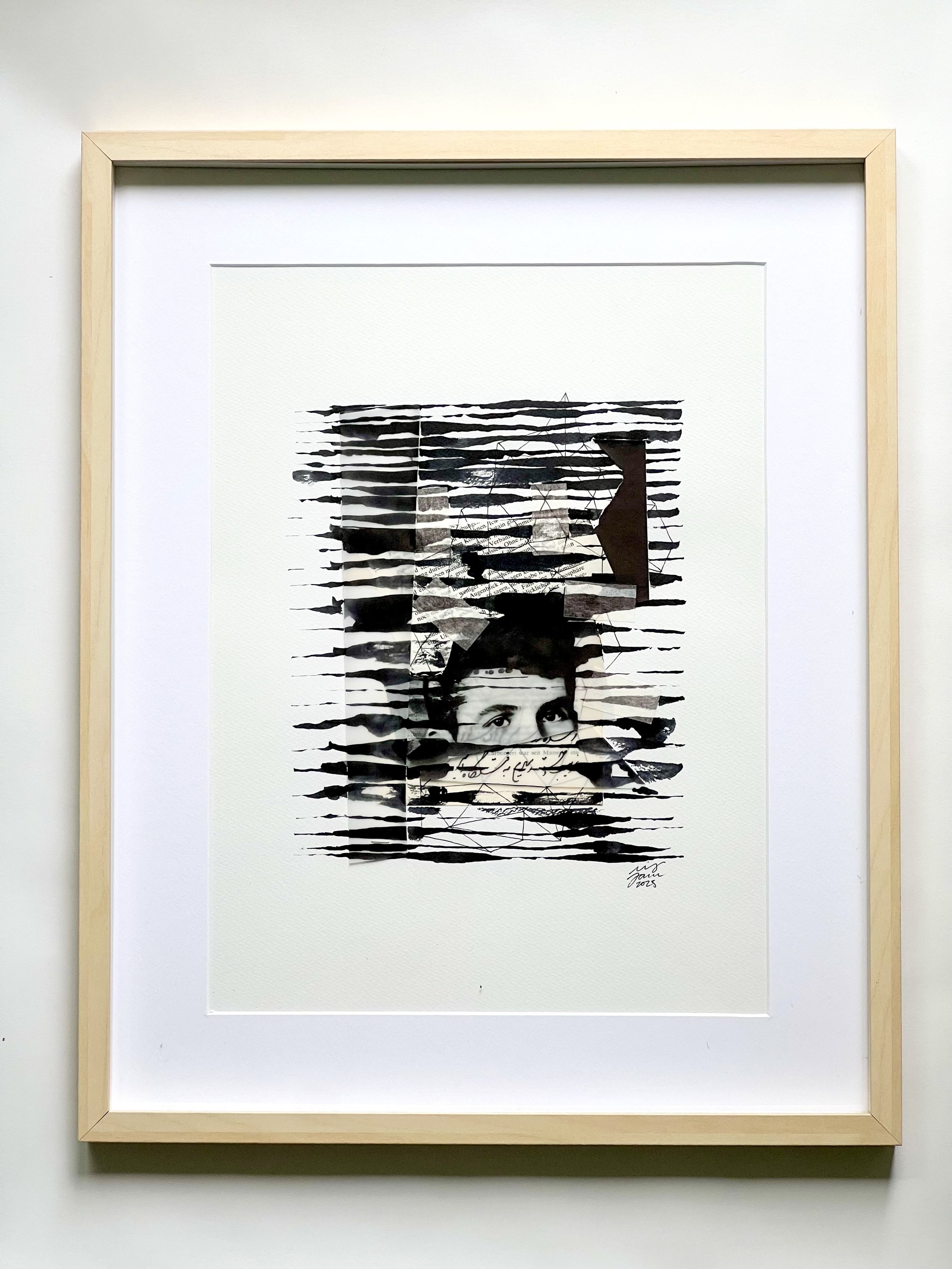
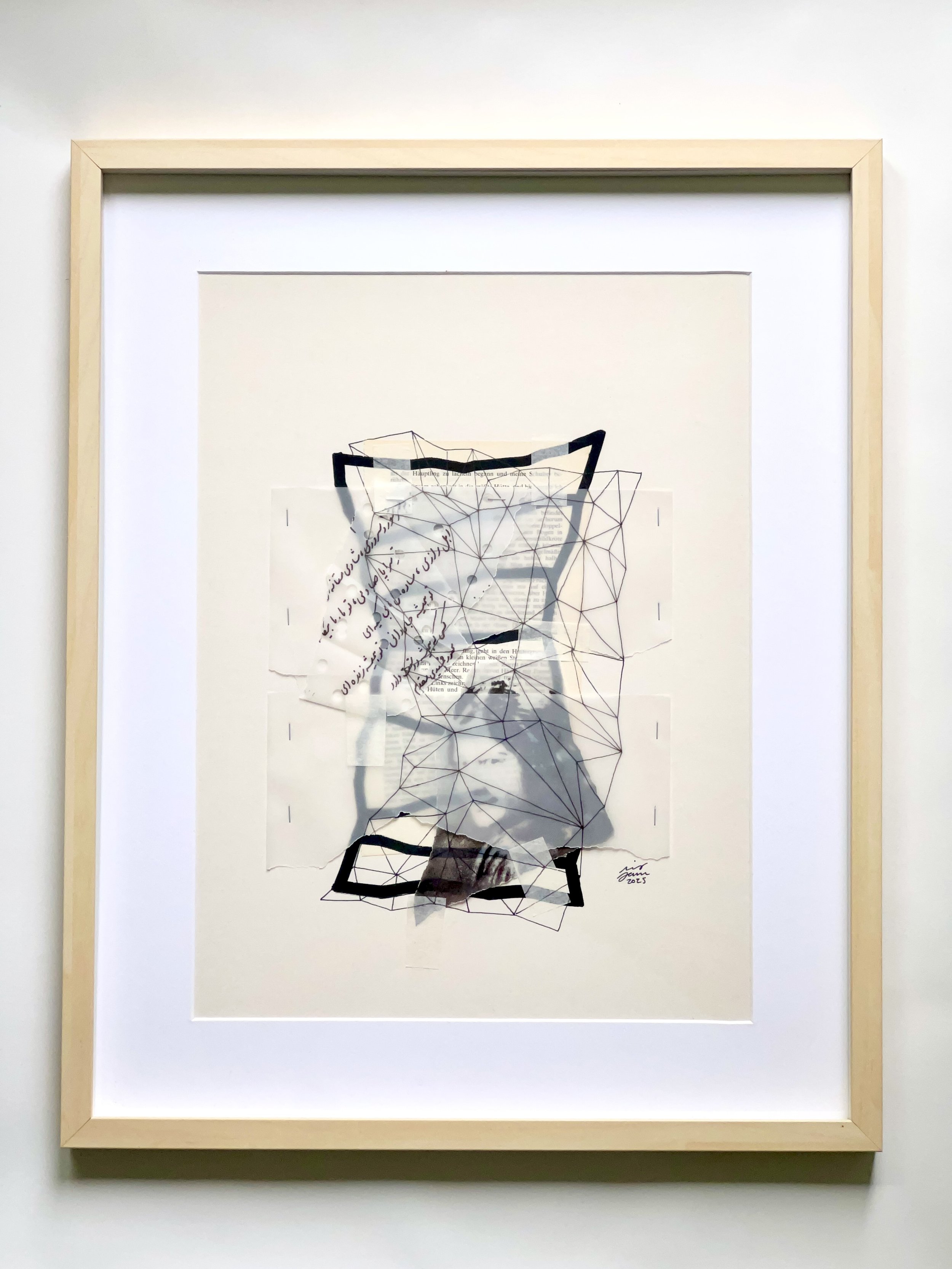
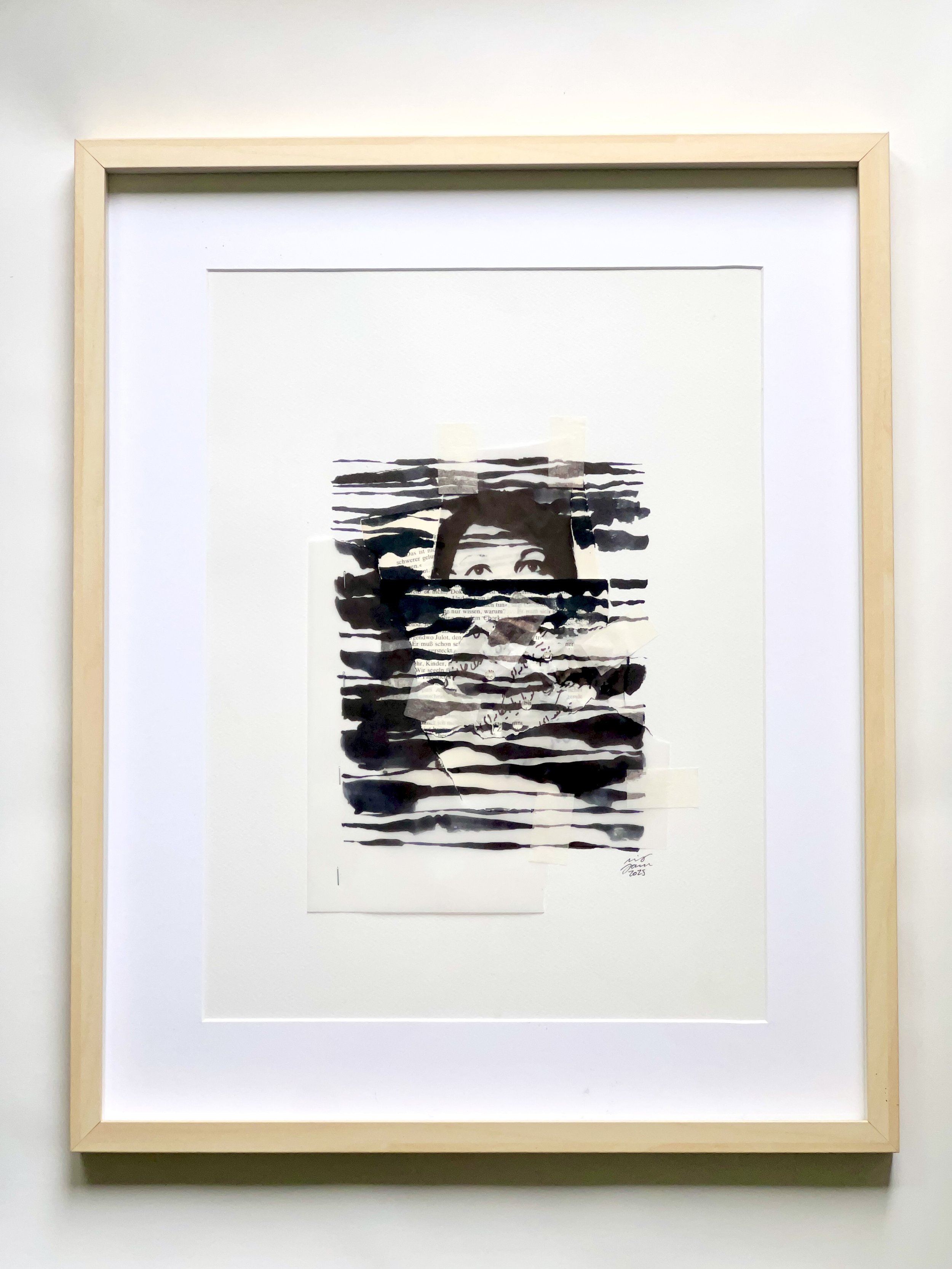
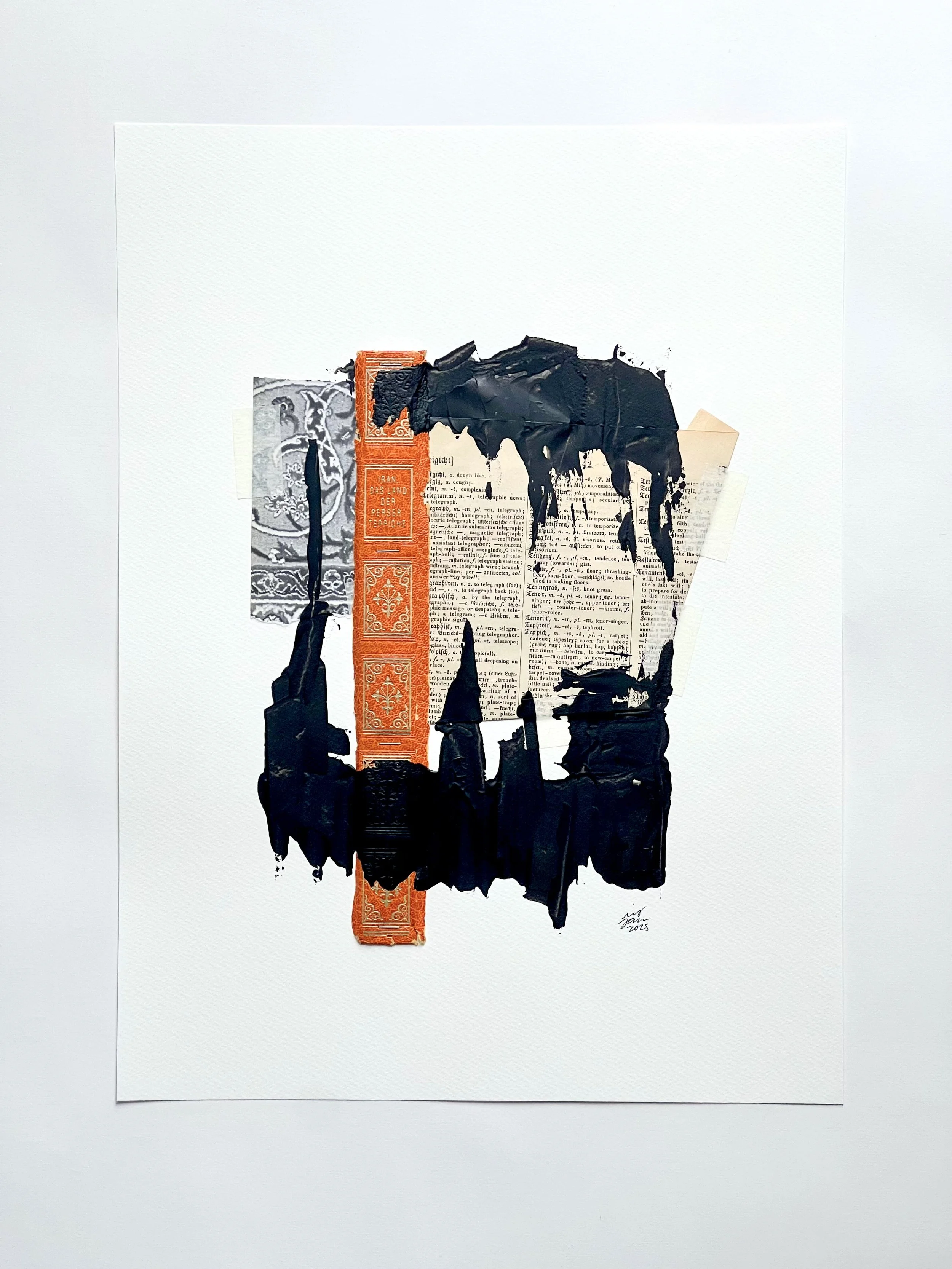
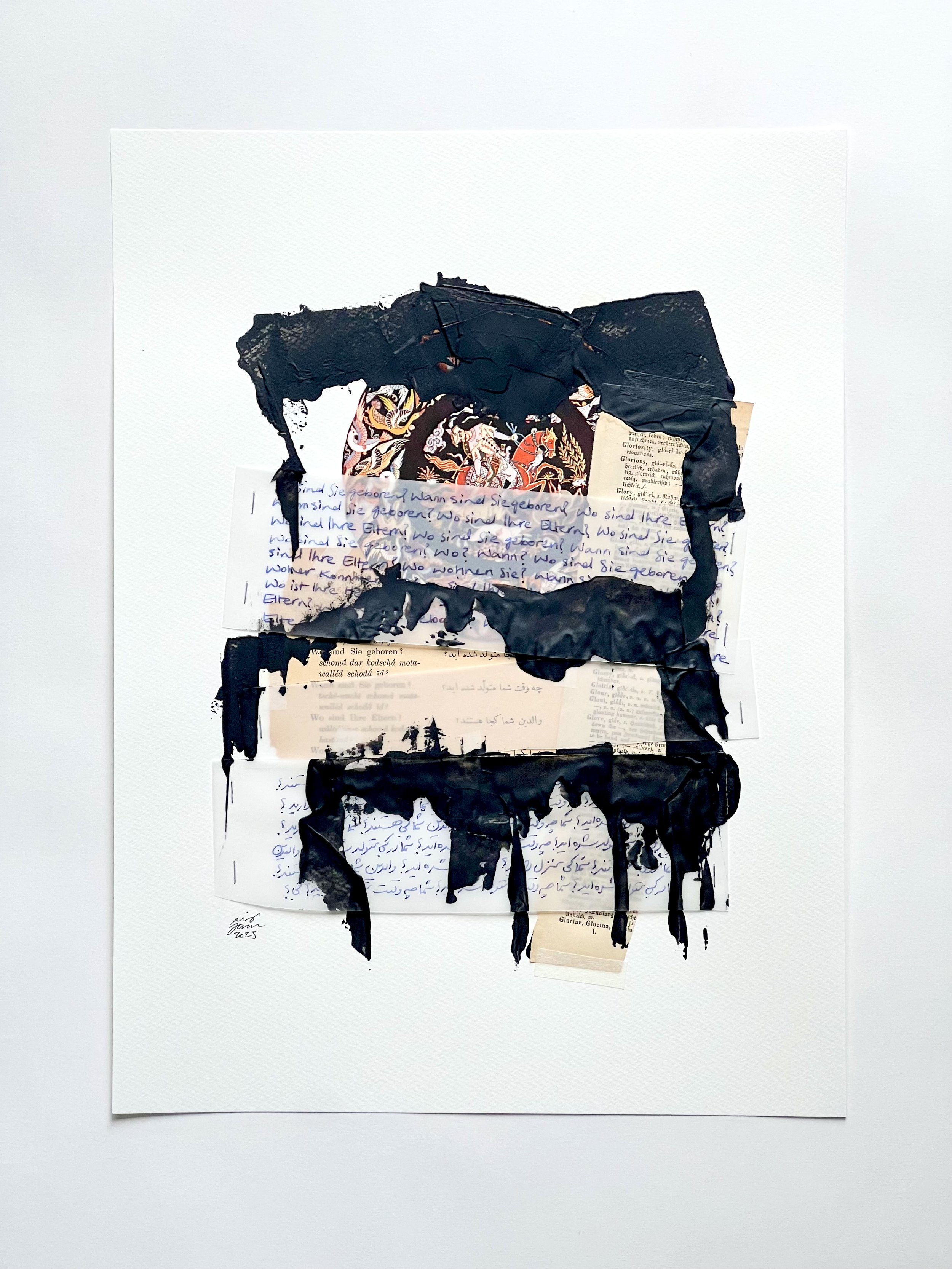
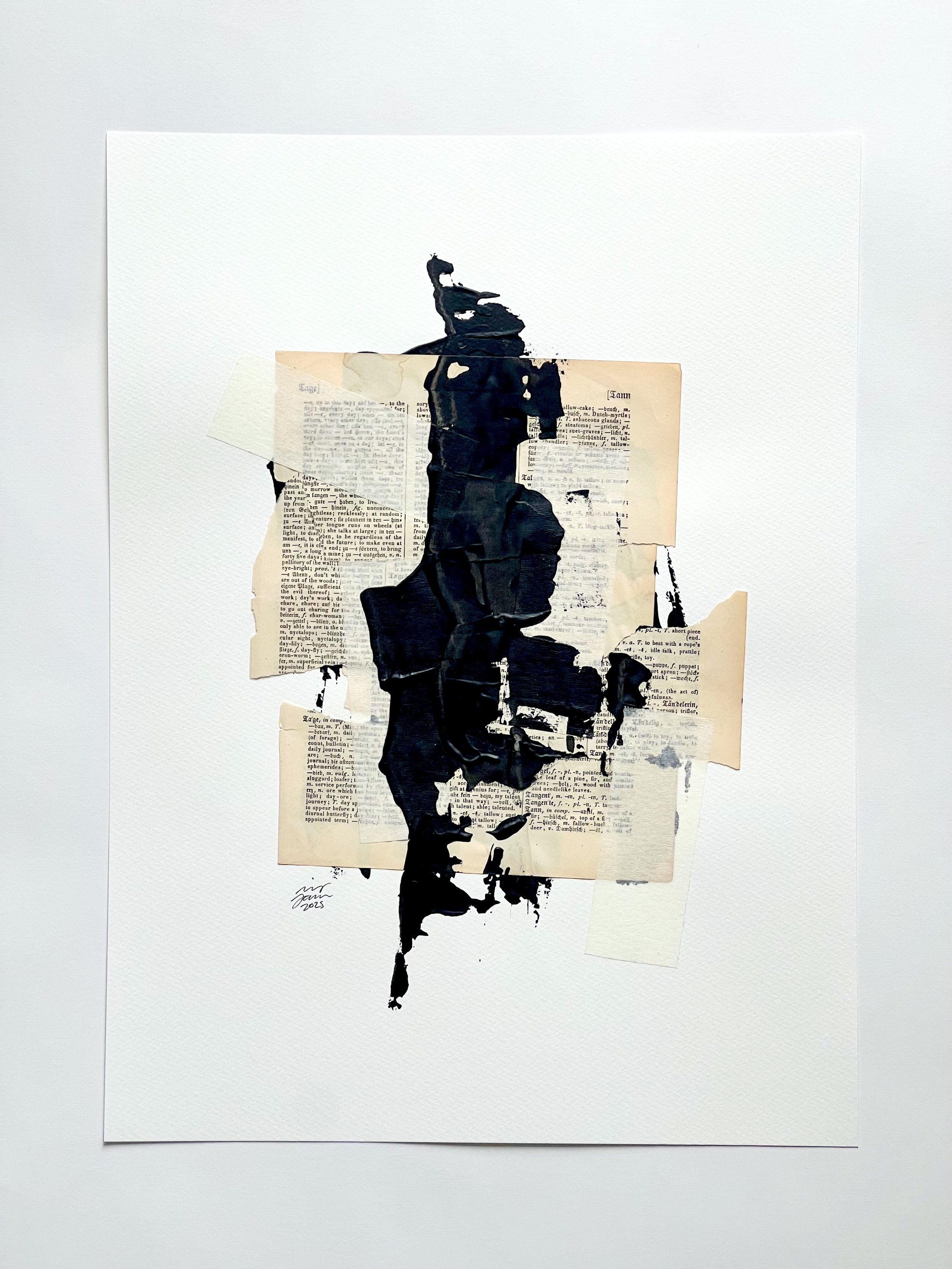
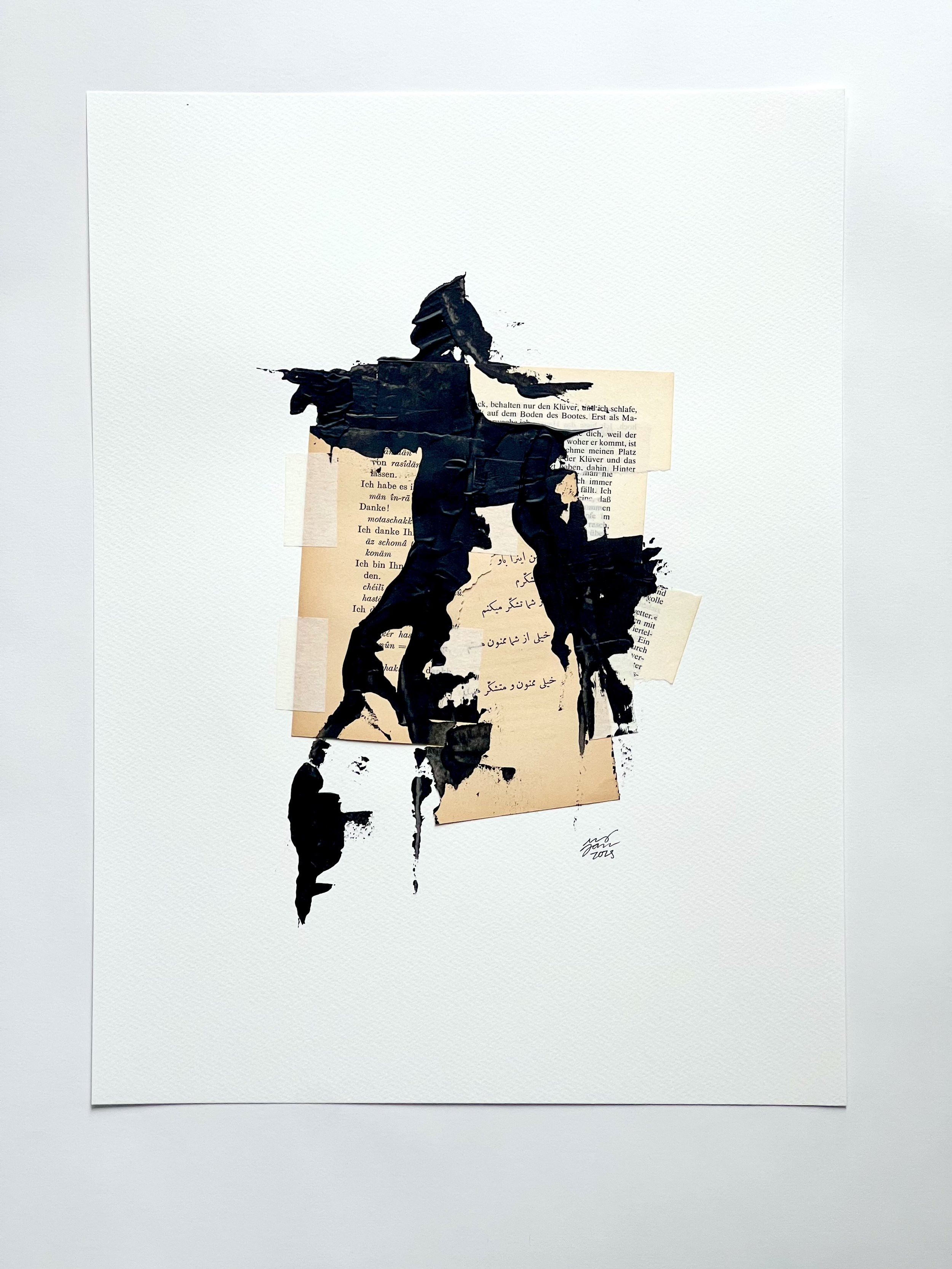
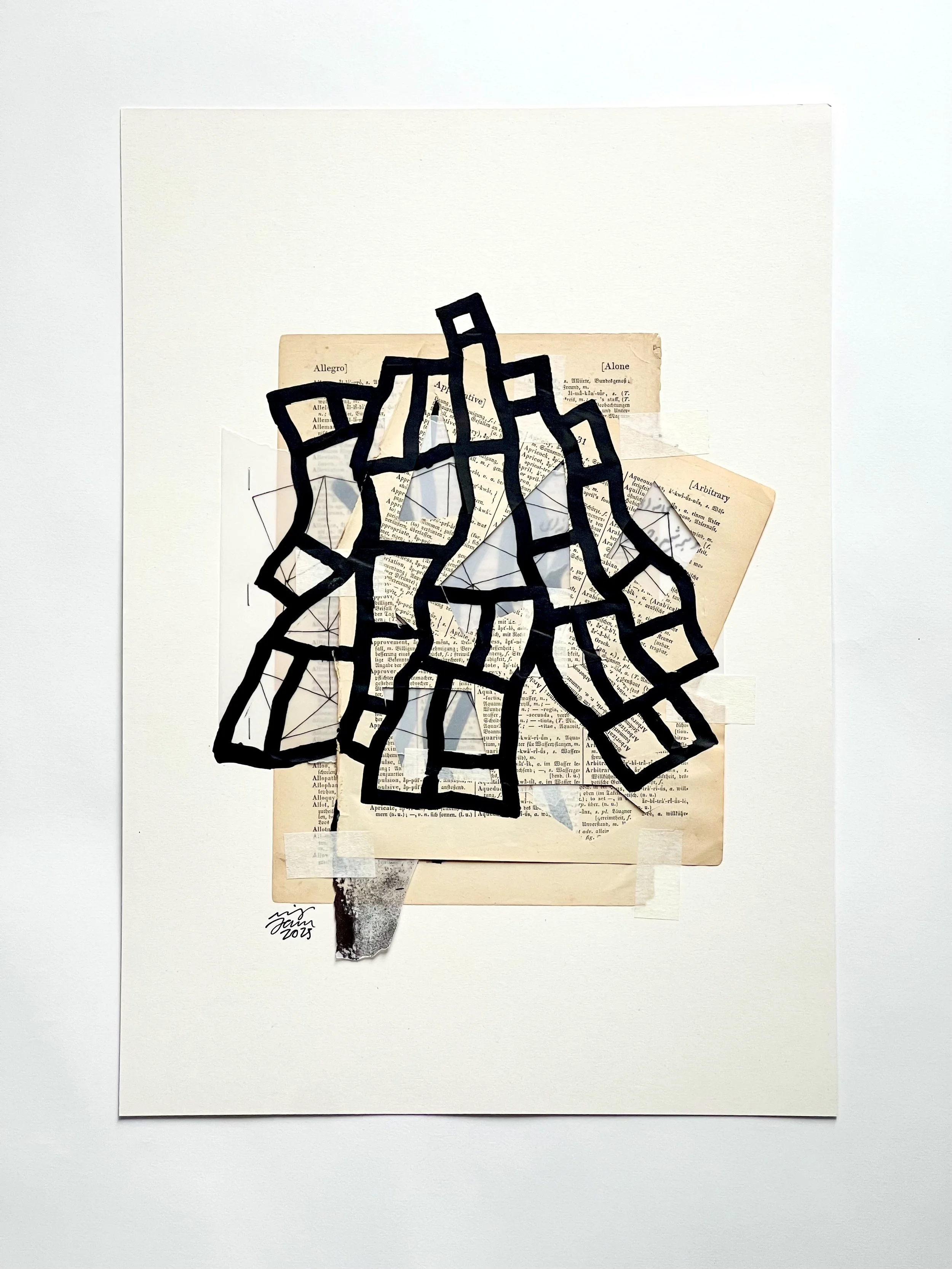
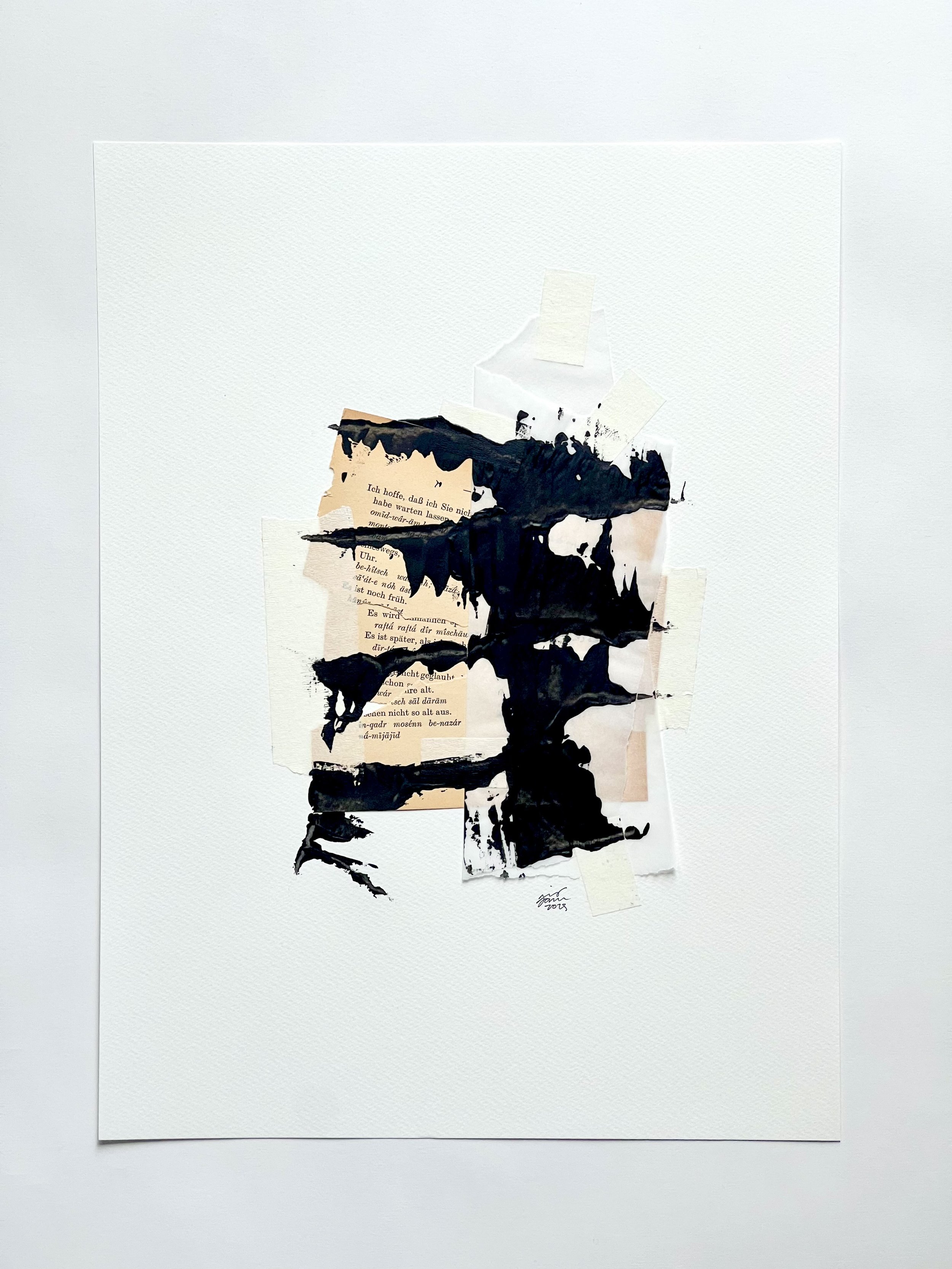
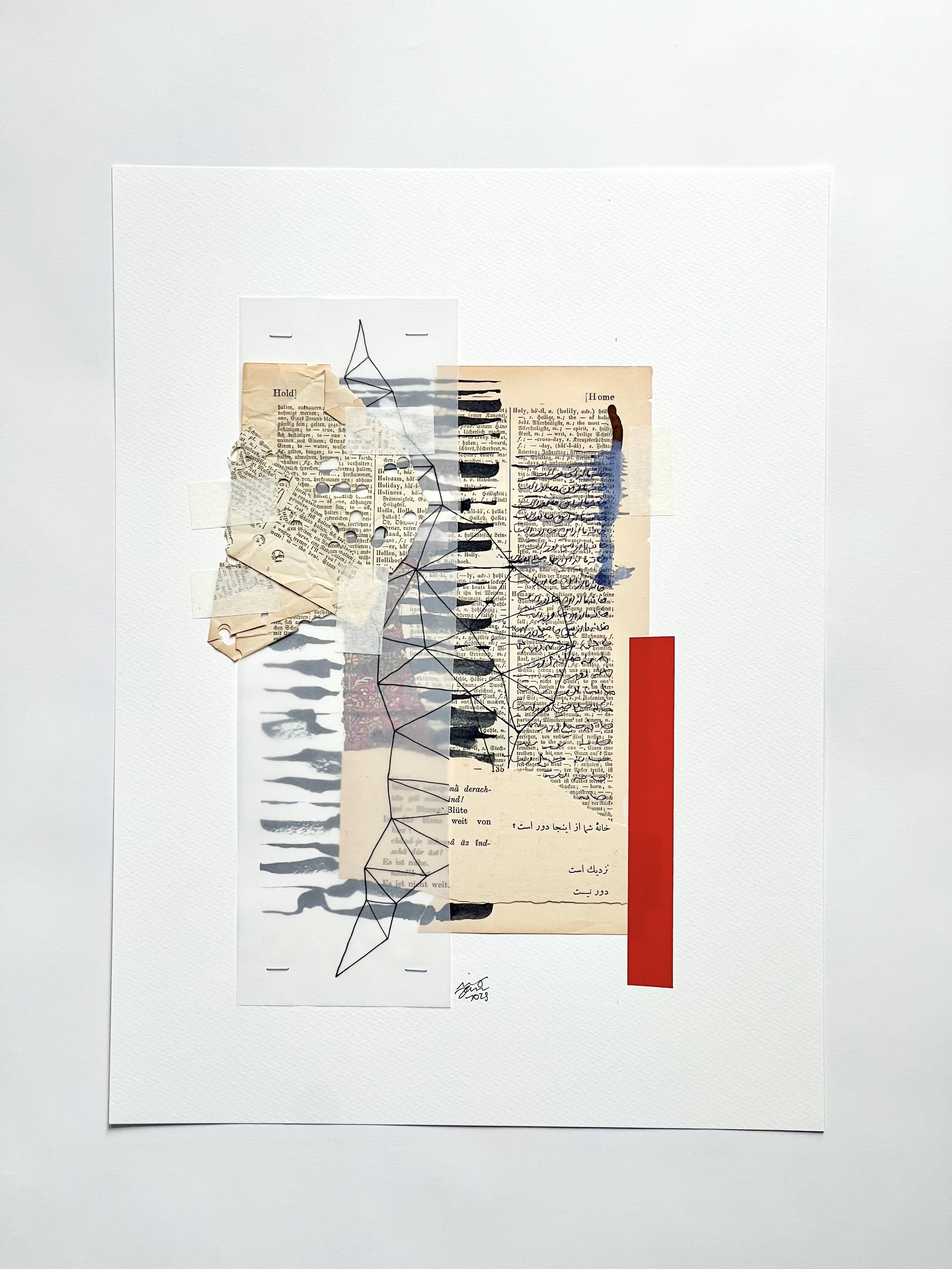
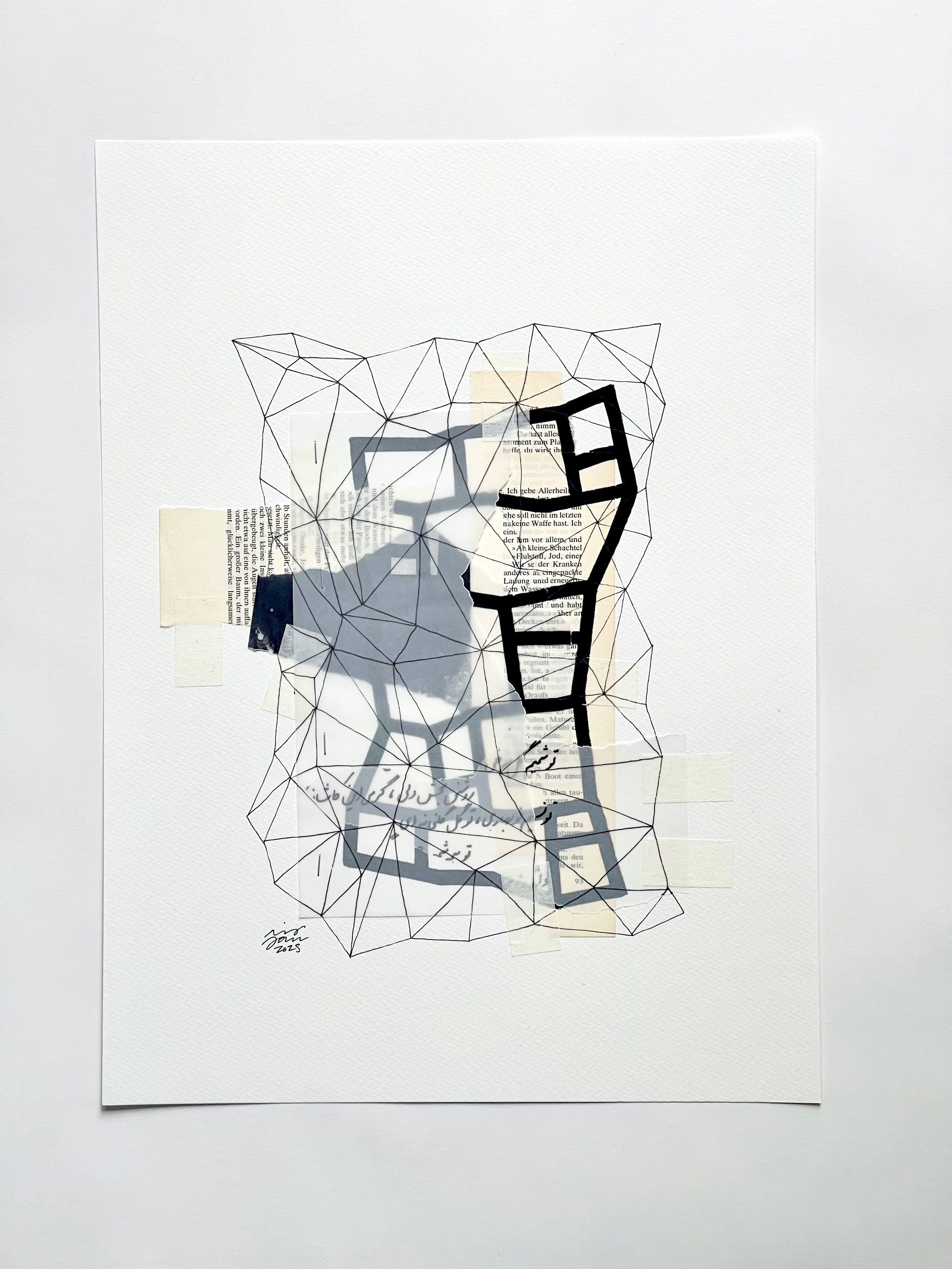
Built from fragments of personal archive — handwritten notes by the artist’s father and mother, poems, family photographs, translucent layers, and pages taken from a self-learning German–English/Farsi dictionary printed during the Shah period — the series examines the unstable relationship between language, migration, memory, and emotional belonging.
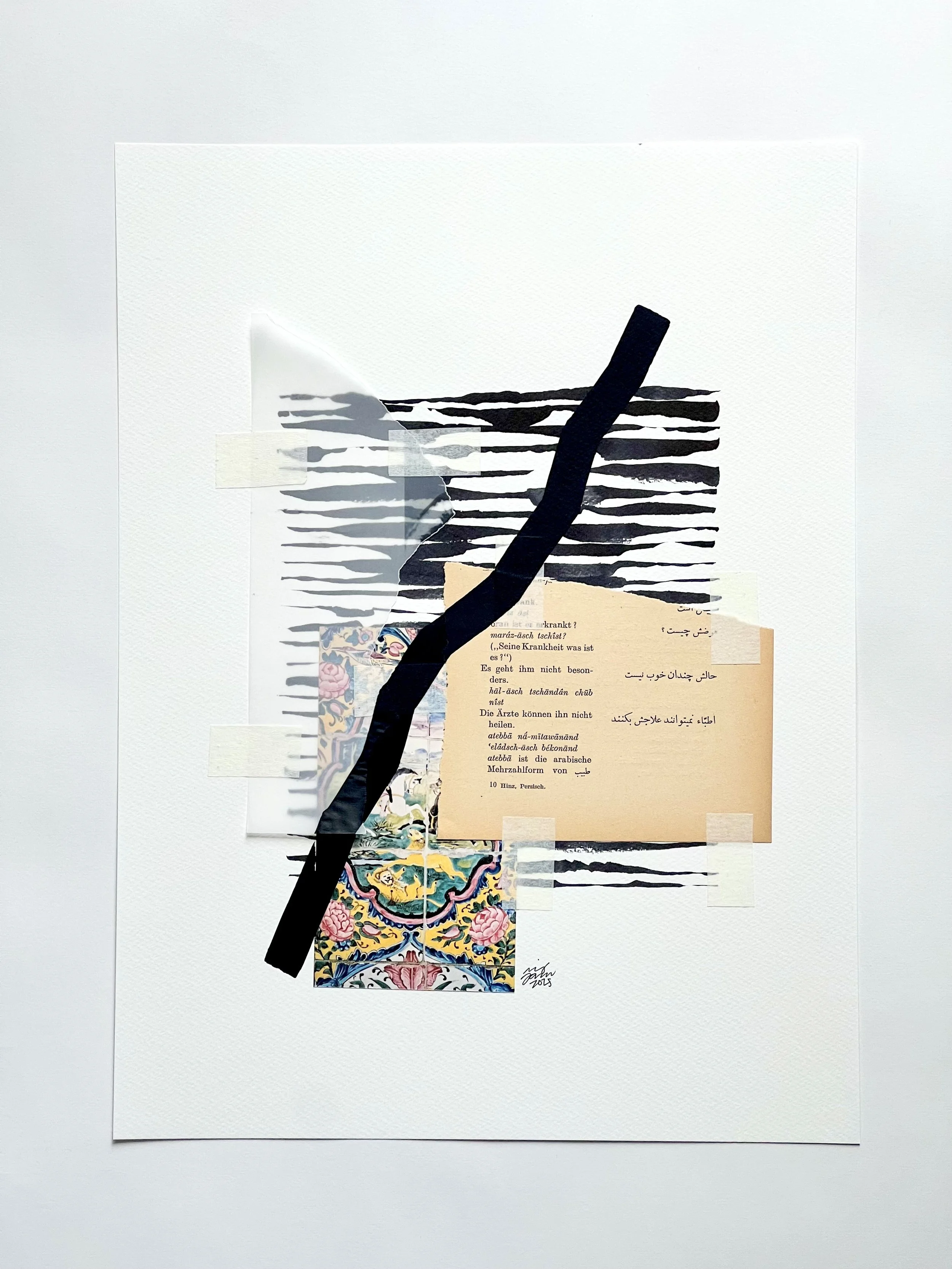
The dictionary pages are central to the work. Originally intended as practical tools for learning German and adapting to a new country, they became tied to the emotional reality of immigrant life: labor, bureaucracy, survival, and communication through an unfamiliar language. During these same years, while the artist struggled to learn German, work, and build a life in Germany, his father was progressively moving through the stages of Alzheimer’s disease in Iran. In this context, selected phrases from the dictionary — such as “Es geht ihm nicht gut” (“He is not well”) — shift from neutral language exercises into intimate and devastating statements.
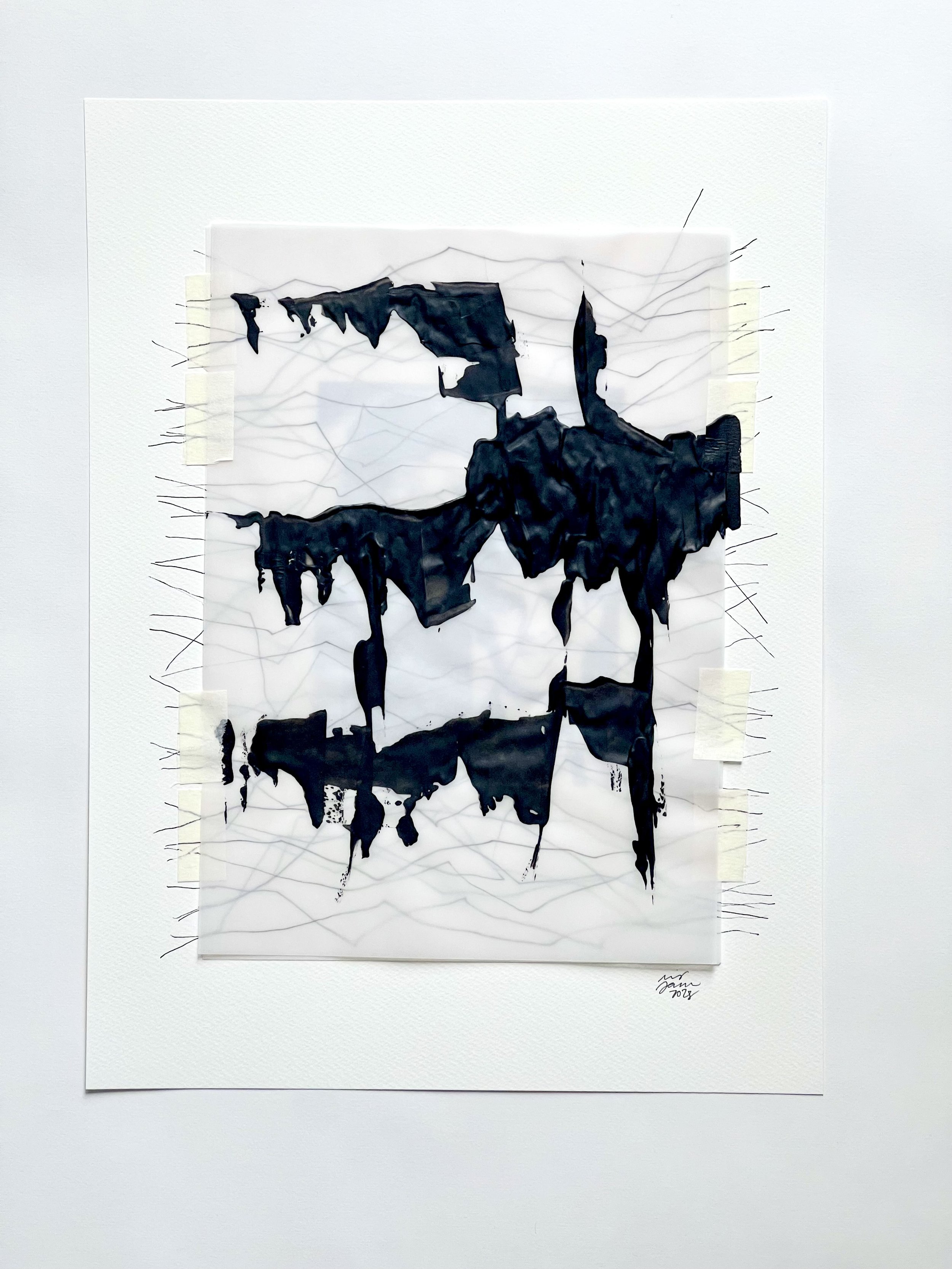
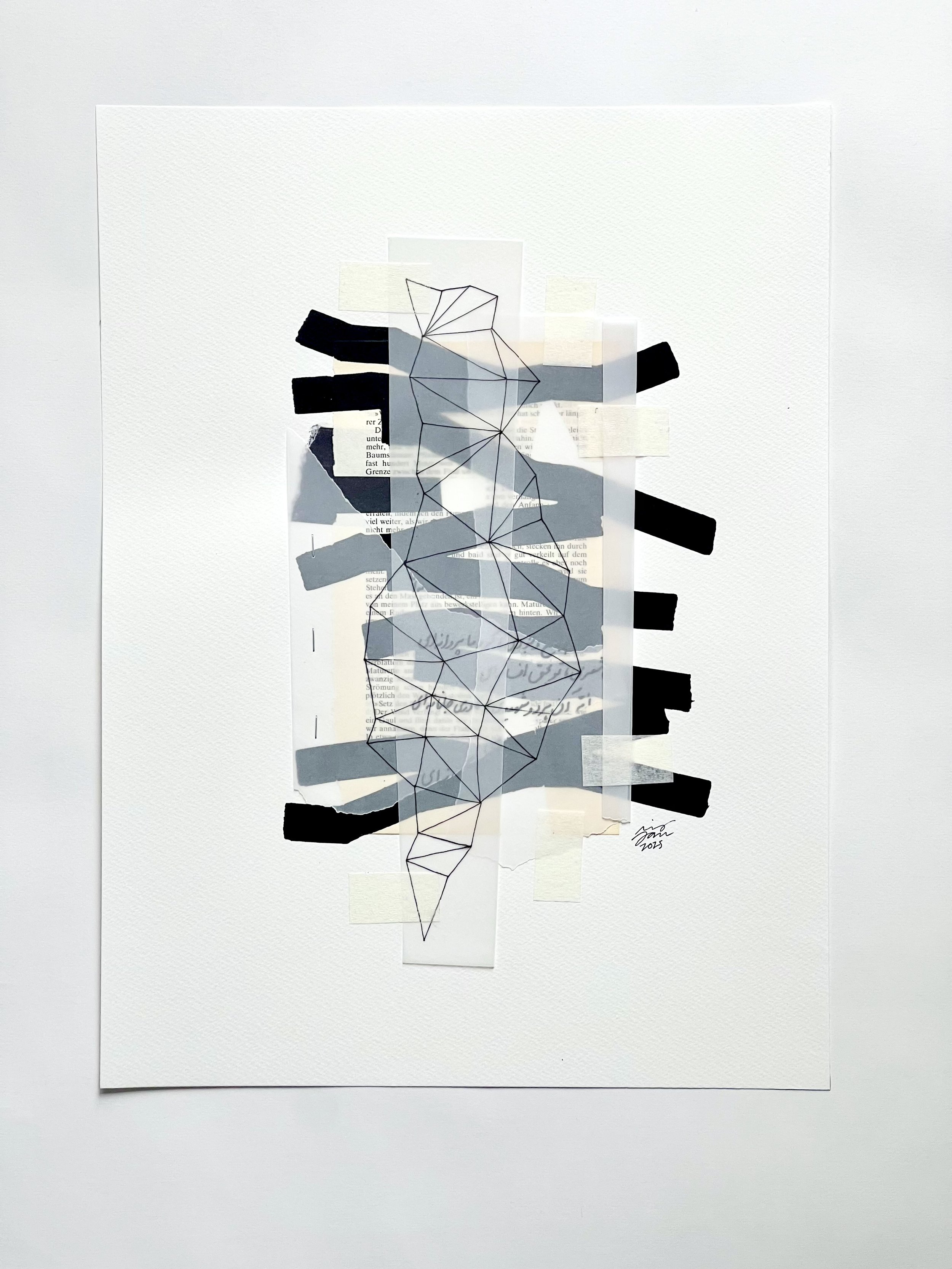
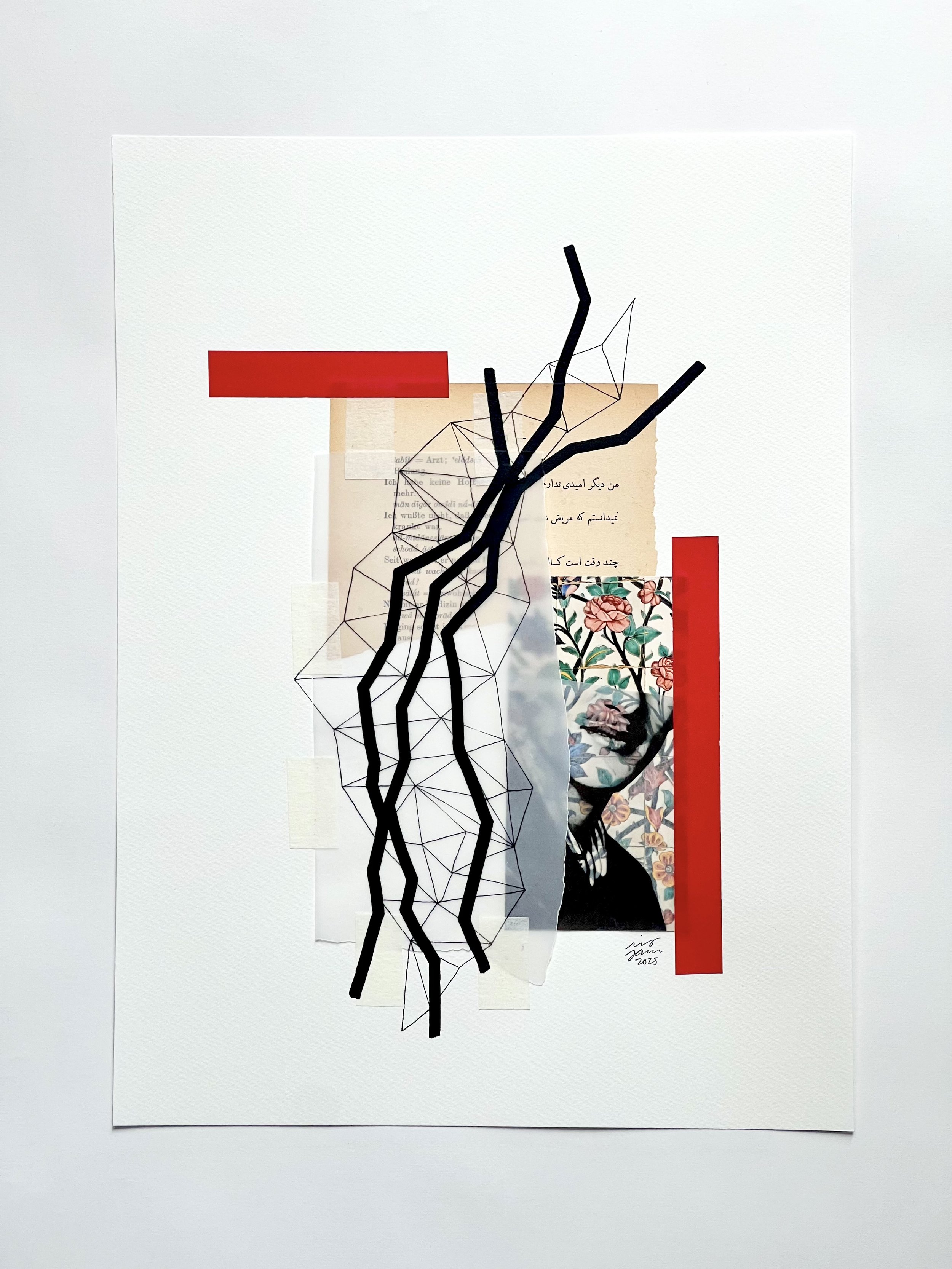
Across the series, texts are obscured, fragmented, stitched together, or partially erased beneath layers of ink, tape, thread, and gestural marks. Faces emerge only temporarily before dissolving again into abstraction. The works resist complete readability, reflecting the instability of recollection itself and the impossibility of fully preserving what is being lost.
Farsi appears throughout the works as the language of intimacy, poetry, family, and emotional memory, while German initially enters as the language of migration, adaptation, paperwork, daily life and survival. Rather than opposing these two languages, the works reveal how grief gradually entangles them together. Language itself becomes a site of displacement.
The black painted forms function simultaneously as concealment and protection — evoking censorship, mourning, forgetting, and the erosion of memory over time. Through layered documents, interrupted texts, and unstable surfaces, the series transforms personal archive into a broader reflection on migration, inheritance, translation, and the fragile structures through which memory attempts to survive.